Program Operations

Owning core execution while coordinating the dependencies around it.

Across my experience, I have worked inside broader operational ecosystems: owning core execution areas while maintaining visibility into the workstreams that affect timelines, logistics, communication, participant readiness, and program delivery. That perspective helps me anticipate bottlenecks, identify downstream impacts, and create structure that helps work move efficiently.

Operational Map Program Operations Ecosystem Execution, coordination, visibility, and systems improvement
01

Participant Experience

  • Applications
  • Selection
  • Family Communication
  • Participant Communication
  • FAQs
02

Post-Program Community

  • Events
  • Community Contributors
  • Community
  • Community Platform
  • Engagement
03

Communications

  • Recurring Communications
  • Resource Database
  • AI-Assisted Drafting
  • Email Campaigns
  • Resource Verification
04

Operations & Logistics

  • Shipping
  • Location Readiness
  • Supply Planning
  • Materials
  • Completion Records
05

Outreach

  • Institution Outreach
  • Outreach Channels
  • Community Organizations
  • Recruitment
06

Systems & Automation

  • Automation Tools
  • Project Management Tools
  • Process Documentation
  • Workflow Design
  • Dashboards

My experience spans several interconnected operational domains. Rather than focusing on a single project, I coordinate and execute across communications, participant experience, post-program engagement, logistics, outreach, and operational systems. Each area has its own recurring work, deadlines, dependencies, and improvements, requiring me to balance execution with long-term process design.

At a Glance

Program Operations

  • National nonprofit programs • Youth programs • Multi-site operations

Education

  • M.S. Child Advocacy & Policy
  • B.A. Elementary Education & American Studies

Certifications

  • PMP®

Operating Stance

Program manager mindset, individual contributor execution.

I often operate as both the program manager and an individual contributor. Rather than managing large teams, I build the systems, templates, automations, and operational rhythms that keep interconnected workstreams moving while personally owning many of the day-to-day operations.

This has given me a strong understanding of dependencies, timing, and participant experience across an entire program lifecycle.

Managing Dependencies Across a Program

Owned work stays aligned with adjacent milestones.

During a participant application process, I owned applicant communications, operational workflows, timeline management, and participant support. At the same time, I maintained awareness of critical milestones owned by other functions because they directly affected program delivery.

Application forms finalized before recruitment launch Partner locations confirmed before participant placement Recruitment progress shaping application volume and location capacity Volunteer onboarding and training completed before program delivery Participant counts informing shipping quantities and logistics Program completion triggering recognition and post-program onboarding

The work was not to manage every function. It was to understand how those functions fit together and keep the operational pieces I owned aligned with the broader program.

Systems

Evidence organized around operational systems, not software.

These are capability stories: interconnected workstreams, repeatable planning systems, and operational rhythms. The recreated visuals support the operating model; the focus is how I structure, execute, coordinate, and improve recurring work.

Capability 01

Coordinating Interconnected Workstreams

Participant experience, post-program engagement, communications, logistics, outreach, and systems work all affect one another. My strength is owning large portions of operational execution while keeping dependencies visible across the broader program ecosystem.

Recreated Example — Fictional Data

Domain Core Execution Dependencies Monitored
Participant Experience Applications, selection support, family communication, FAQs Recruitment progress, application timelines, placement readiness
Communications Recurring updates, resource verification, email campaigns, audience routing Event schedule, participant needs, resource quality, send cadence
Operations & Logistics Shipping, materials, recognition records, location readiness checks Partner location confirmations, attendance estimates, delivery timelines
Systems & Automation Dashboards, templates, documentation, workflow design Recurring work, handoffs, review points, process gaps

What I coordinate

  • Participant recruitment, applications, applicant support, and family communication.
  • Application review, scoring, selection support, and participant placement.
  • Pre-program logistics, multi-location shipping, location readiness, and program-day support.
  • Completion records, post-program transition, events, recurring communications, and ongoing engagement.

What this demonstrates

Operational ownership across core execution areas, dependency tracking, risk awareness, participant experience design, and coordination with stakeholders whose work affects delivery.

Capability 02

Building Repeatable Operational Systems

Recurring work becomes scalable when it has a rhythm: templates, checklists, goals, handoffs, review steps, and a clear definition of done. I turn repeat work into operating systems that can be reused and improved.

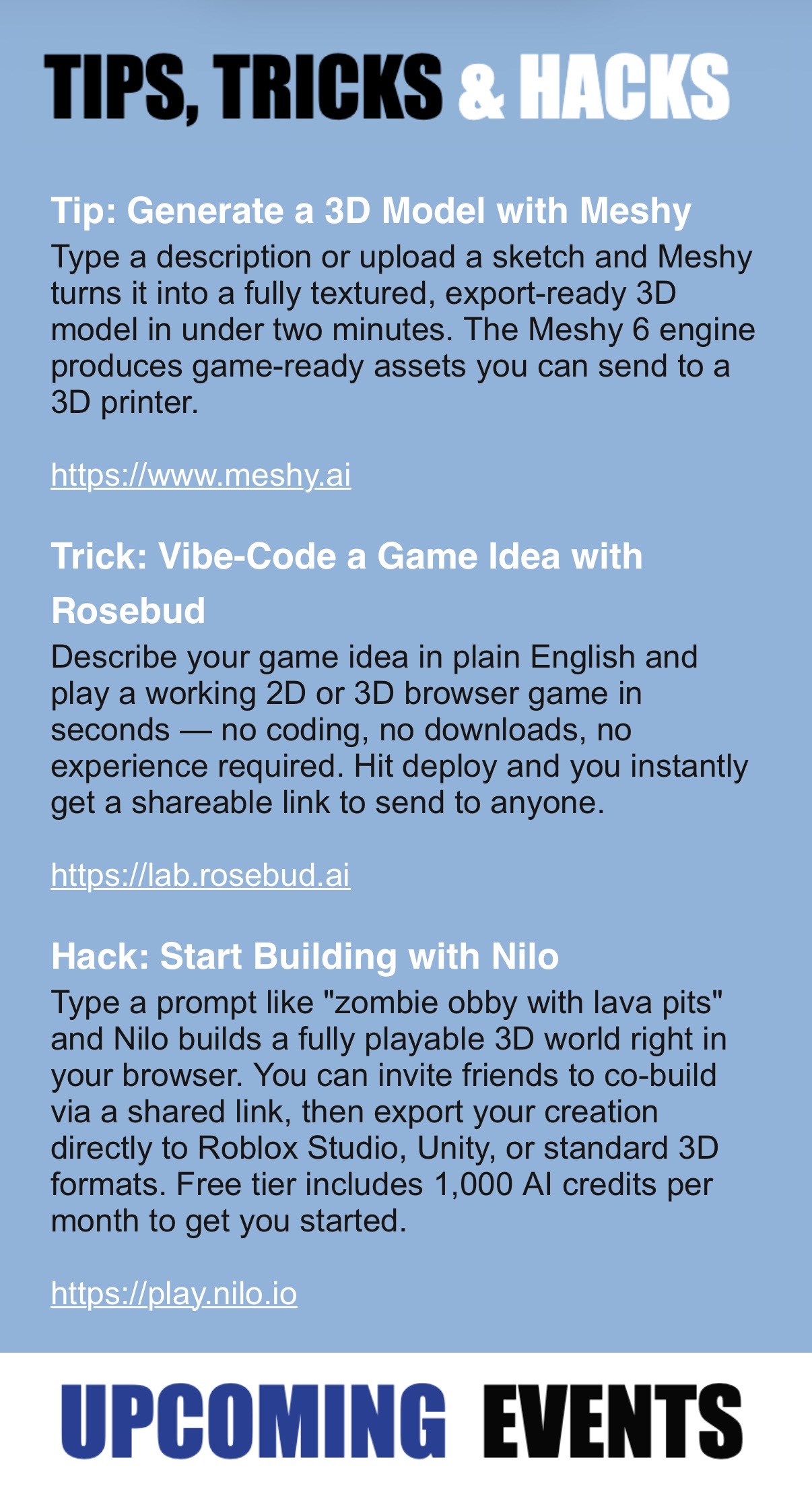
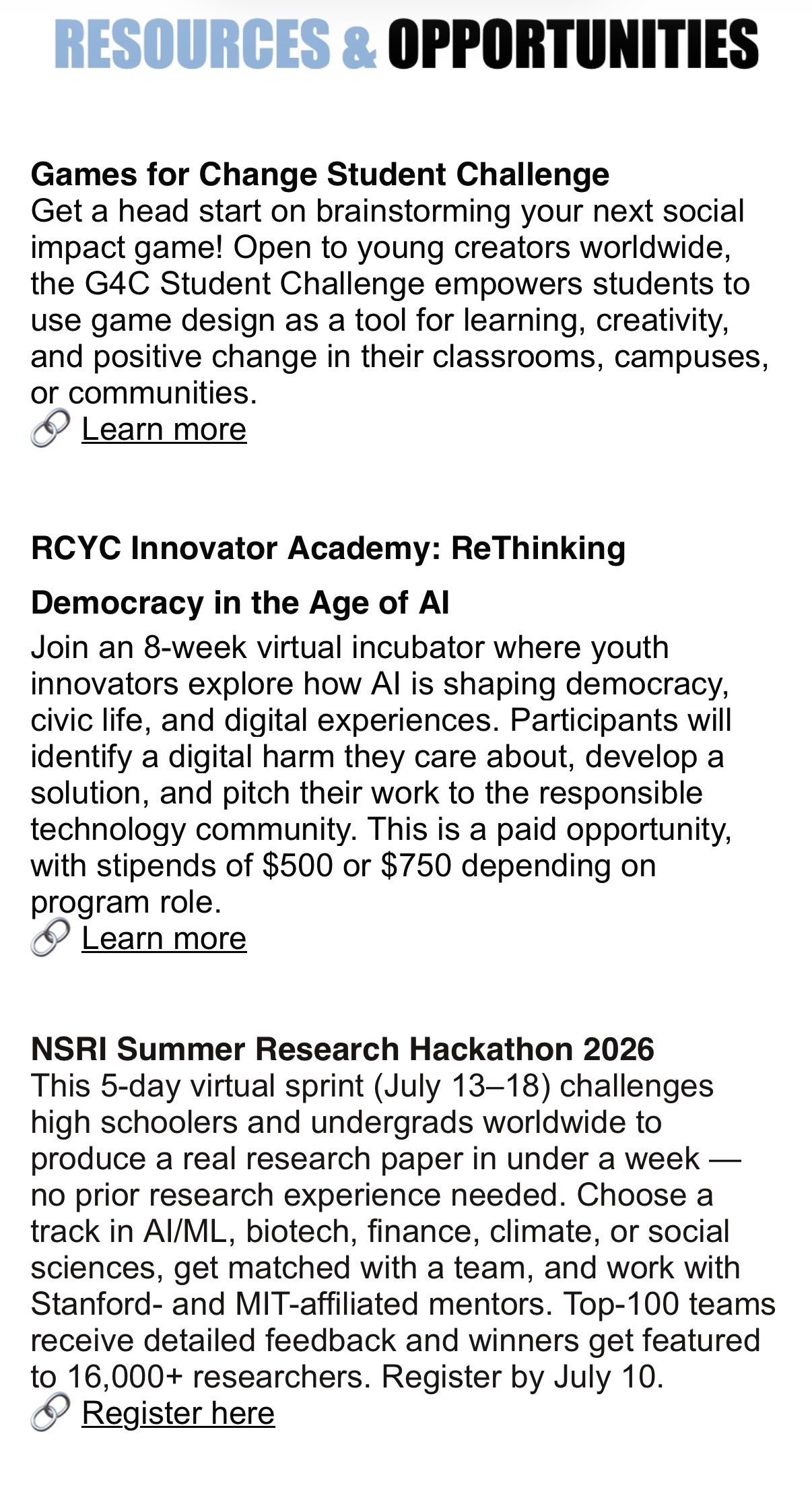
Recreated Operating System

01
Goals become operating work

Community goals are broken into measurable workstreams instead of loose ideas.

Post-Program Community — Goals & Metrics
ListTimelineDashboard
Participant Engagement

Track invited vs. joined, welcome session attendance, and feedback responses.

Track invited vs. joined
Increase year-end feedback responses
Community Participation

Define contribution categories and review participation quarterly.

Define major contribution criteria
Identify inactive contributors
Events & Programming

Track event count, attendance, feedback, recordings, and follow-up.

Recreated Example — Similar Operating Structure
02
Recurring communication gets a checklist

Communication tasks are sequenced so content, review, and send steps are repeatable.

Communication Planning Checklist 0 / 7
Select or create visual asset
Draft tips, tools, and participant resources
Add upcoming events
Compile resources and opportunities
Review links, deadlines, and eligibility
Finalize communication copy and layout
Schedule send and archive source notes
Recreated Example — Similar Checklist Logic
03
Events follow the same operating rhythm

Setup, promotion, delivery, recording, and follow-up live in one reusable flow.

Event Planning Workflow Template
Confirm presenter, date, and meeting link
Create registration and participant reminders
Add event to community calendar
Share details with communication workflow
Deliver session and monitor questions
Download and edit recording
Send recording, feedback form, and follow-up
Recreated Example — Fictional Data
Strategic goalsProjectsRecurring eventsQuality checksMetricsReporting

What becomes repeatable

  • Recurring communication planning, resource review, drafting, final checks, and send cadence.
  • Event planning, registration setup, promotion, recording, follow-up, and feedback collection.
  • Planning framework, goals, metrics, quality checklists, and recurring workstreams.
  • Shipping readiness through material quantities, packing checks, delivery tracking, and issue escalation.

What this demonstrates

Operational strategy, project management, standardized execution, documentation, continuous improvement, and the ability to reduce dependence on individual memory.

Capability 03

AI-Assisted Communications System

This communications system shows how I turn scattered research into verified, organized, newsletter-ready content. The goal is not AI for novelty; it is a repeatable editorial and operations system with review states, quality checks, audience routing, and clear output formats.

Recreated Builder + Output Examples

01
Organize resources before drafting

Resources move through review states before they become communication-ready content.

02
Route audiences automatically

Automation paths move subscribers into the right email audience without manual sorting.
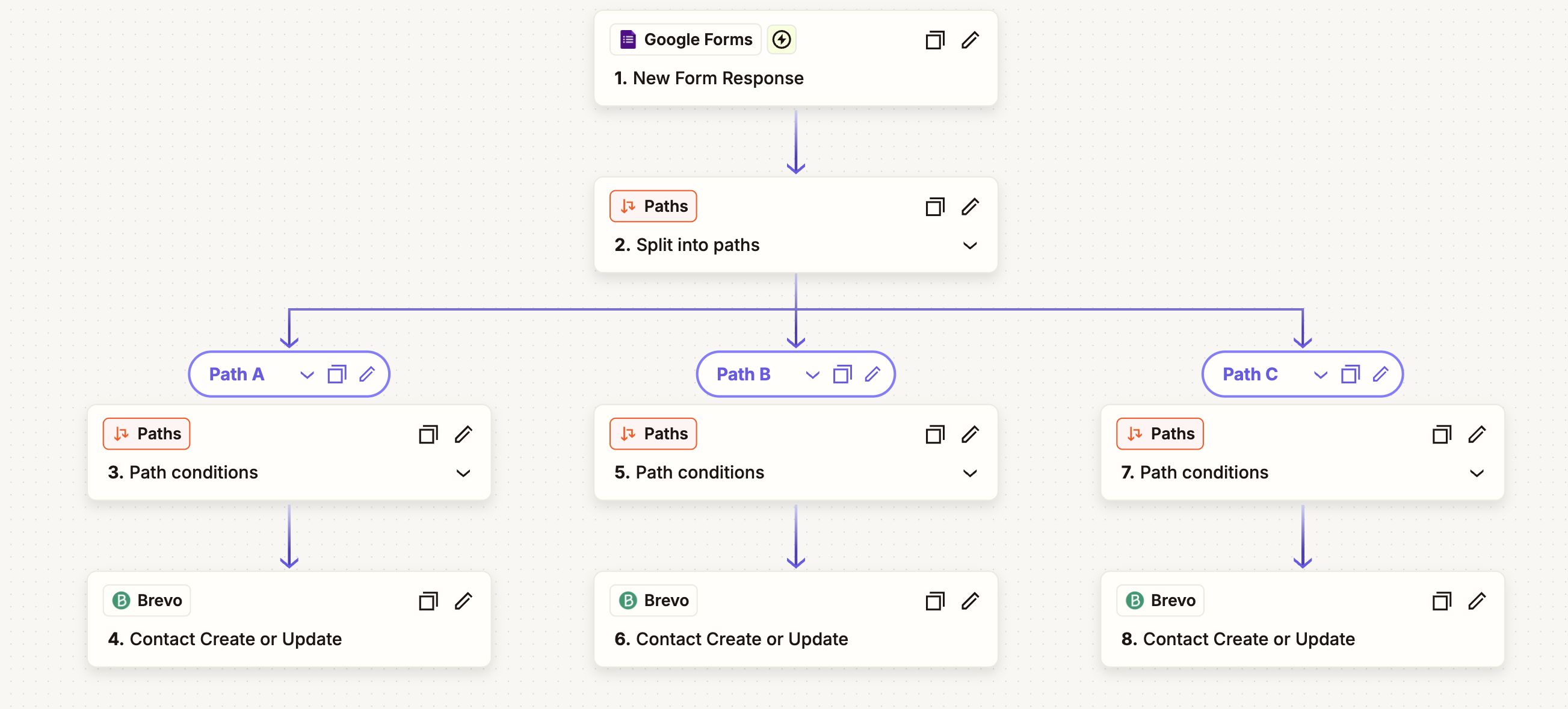
Automation workflow splitting a form response into audience paths.
Audience routing automation
ResearchVerifyCategorizeAI draftHuman reviewPublishRoute audience

What I built

  • A resource dashboard that tracks review states, deadlines, readiness, and communication fit.
  • An AI-assisted drafting workflow that turns verified resources into structured communication sections.
  • An audience-routing automation that reduces manual list maintenance and supports segmented communication.
  • A human review layer for accuracy, tone, eligibility, equity, and final quality control.

What this demonstrates

Communication operations, AI workflow design, systems integration, automation, data organization, quality control, and practical tool-building across operational environments.

Capability 04

Program Communications System

Clear program communication is operational infrastructure. It helps partners, participants, and stakeholders understand the experience, why it matters, and how to engage without needing a long explanation from an internal team member.

Real Communication Artifact

01
AI Bootcamp Alumni Network Overview

An external-facing one-page resource designed to explain the alumni experience and communicate program value.
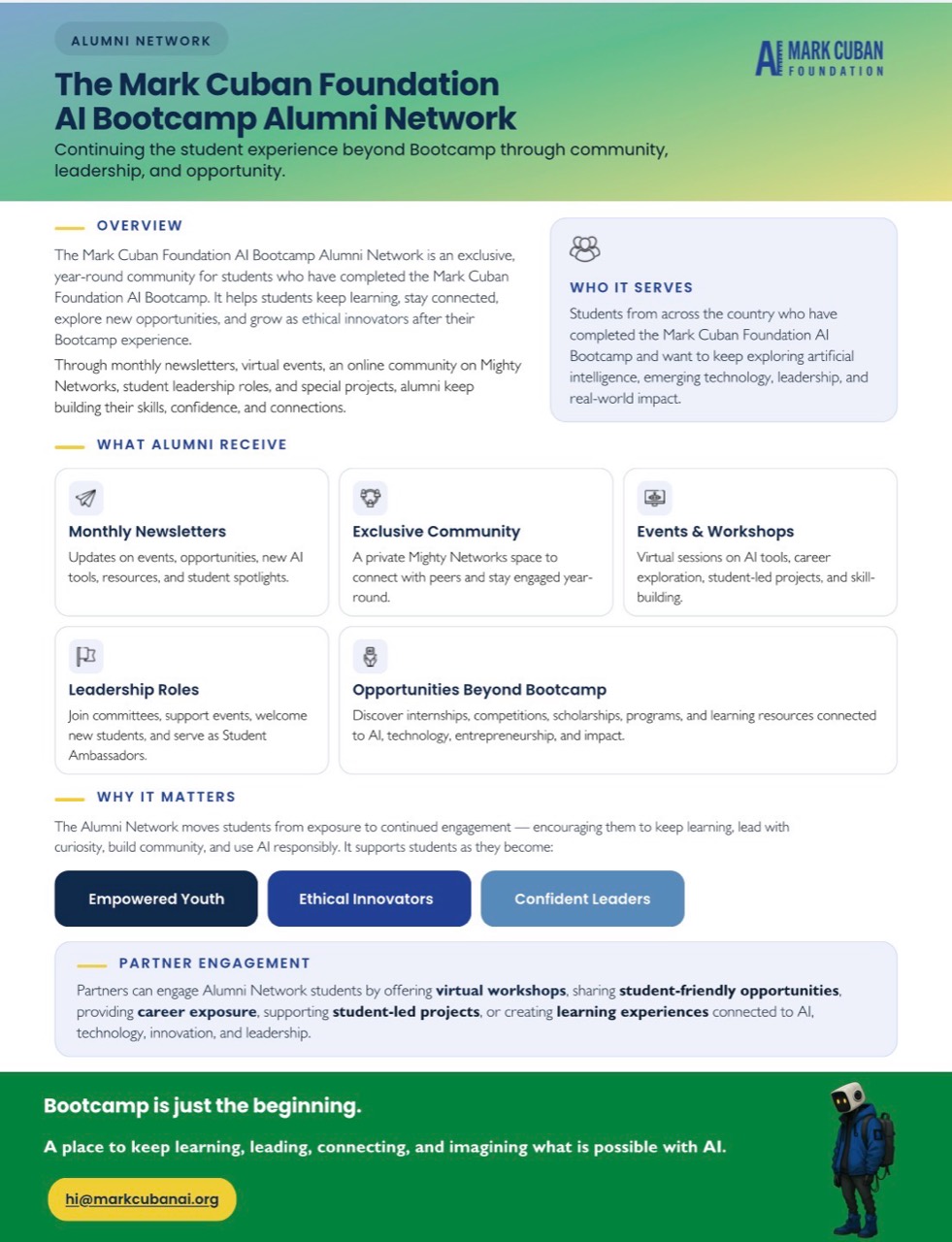
One-page overview explaining the AI Bootcamp Alumni Network experience, benefits, and partner engagement opportunities.
Program overview: communication hierarchy, value framing, and partner engagement

What I created

Created an external-facing one-page resource that explains the alumni experience, communicates program value, and gives partners clear ways to engage.

How I approached it

  • Organized source information into a clear communication hierarchy.
  • Defined the core audience, value proposition, program benefits, and engagement pathways.
  • Supplied brand guidelines and direction for the visual structure.
  • Used Claude to help produce the initial visual layout and copy presentation.
  • Reviewed, refined, and shaped the final version for clarity, tone, and usefulness.

What this demonstrates

Program communication strategy, information architecture, AI-enabled content development, stakeholder-facing documentation, and the ability to translate complex program experiences into clear materials people can use.

Independent Builds

A tool I built to make opportunity discovery easier to navigate.

This project complements my program operations experience by showing how I identify recurring friction points, design practical technology solutions, and build usable tools around student needs.

Build 01

Opportunity Discovery Platform

I designed and built a student-facing discovery tool that turns a broad opportunity database into a guided search experience. This work demonstrates product thinking, information architecture, user experience design, and a student-centered approach to access.

Real Product Screens

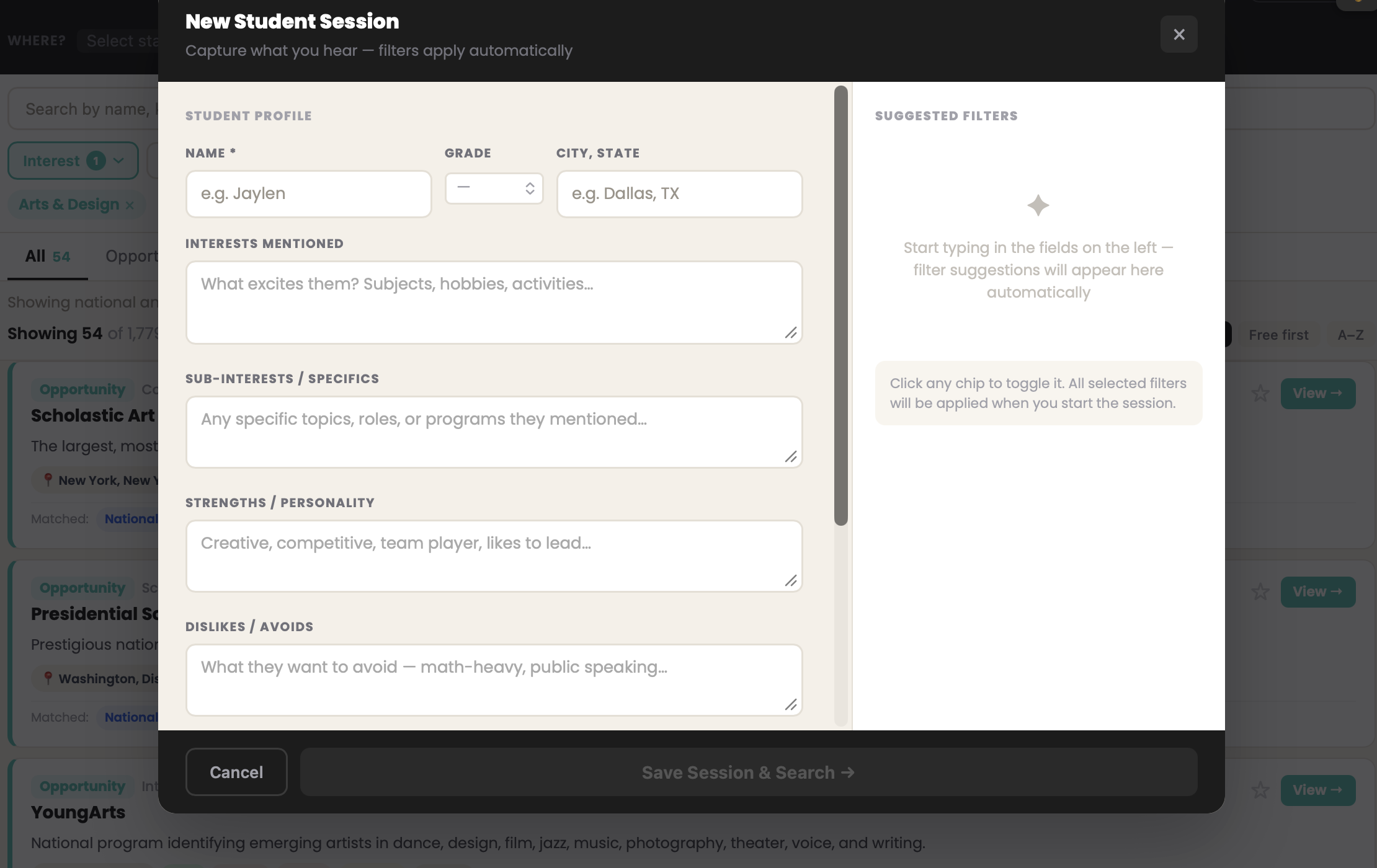
01
Start with student context

Guided intake captures grade, location, interests, strengths, preferences, and constraints before search begins.
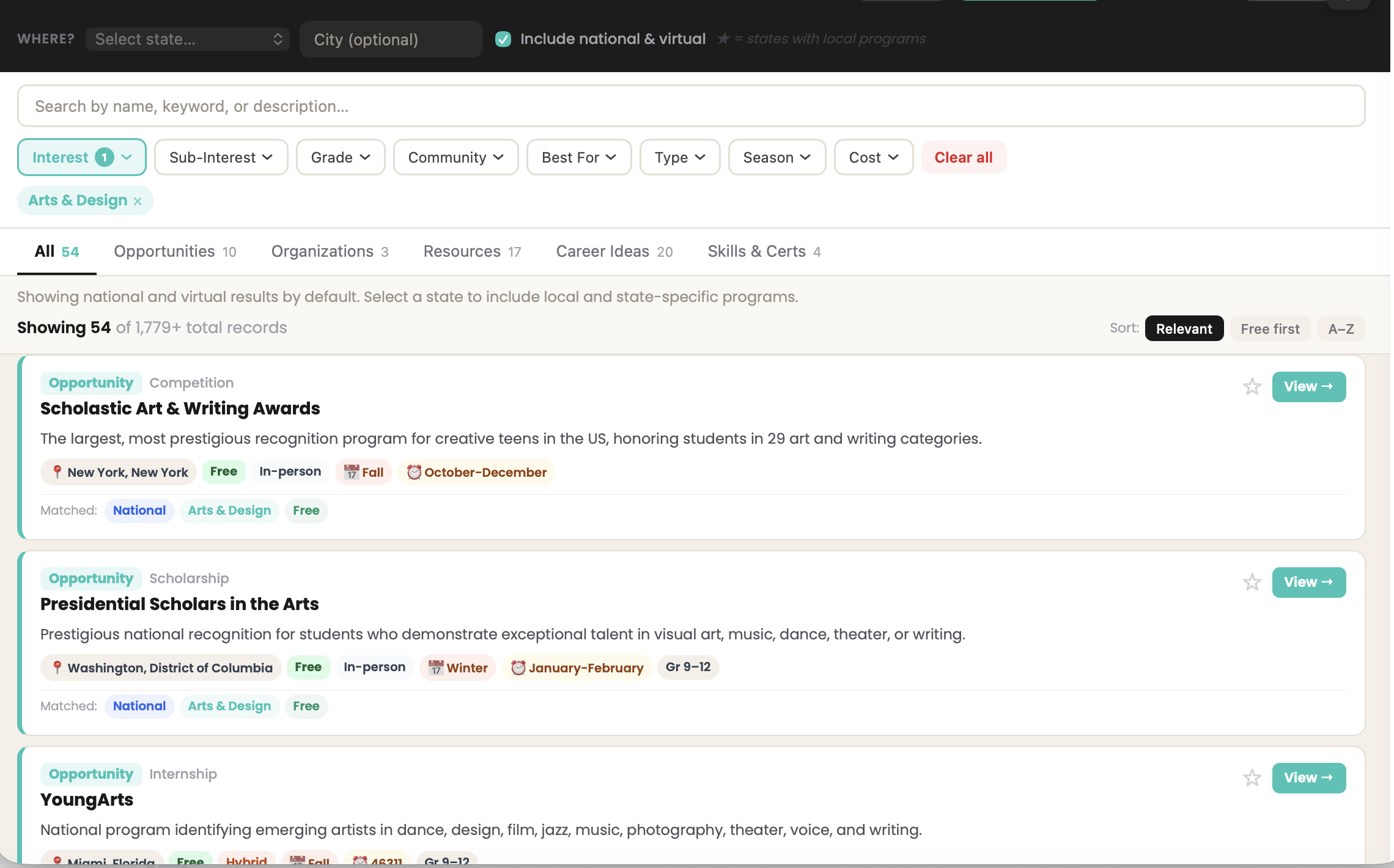
Student contextEligibilityFiltersSearch resultsMatched criteriaNext steps

What I built

  • A student intake flow that turns conversational context into useful search signals.
  • A searchable opportunity interface organized by type, interest, location, cost, grade, season, and fit.
  • Filtering and matched-result cues that help students understand why an opportunity may be relevant.
  • A structure that can support data organization, recommendations, and future workflow improvements.

What this demonstrates

Product design, UX thinking, information architecture, independent initiative, student-centered systems design, and the ability to build practical tools around discovery and decision-making.

Contact